Today, while we walk through the schoolyard, we noticed something on the ground. They look like tiny fruits or seeds. We picked one — it is light, almost like paper, with a little hole on the top.
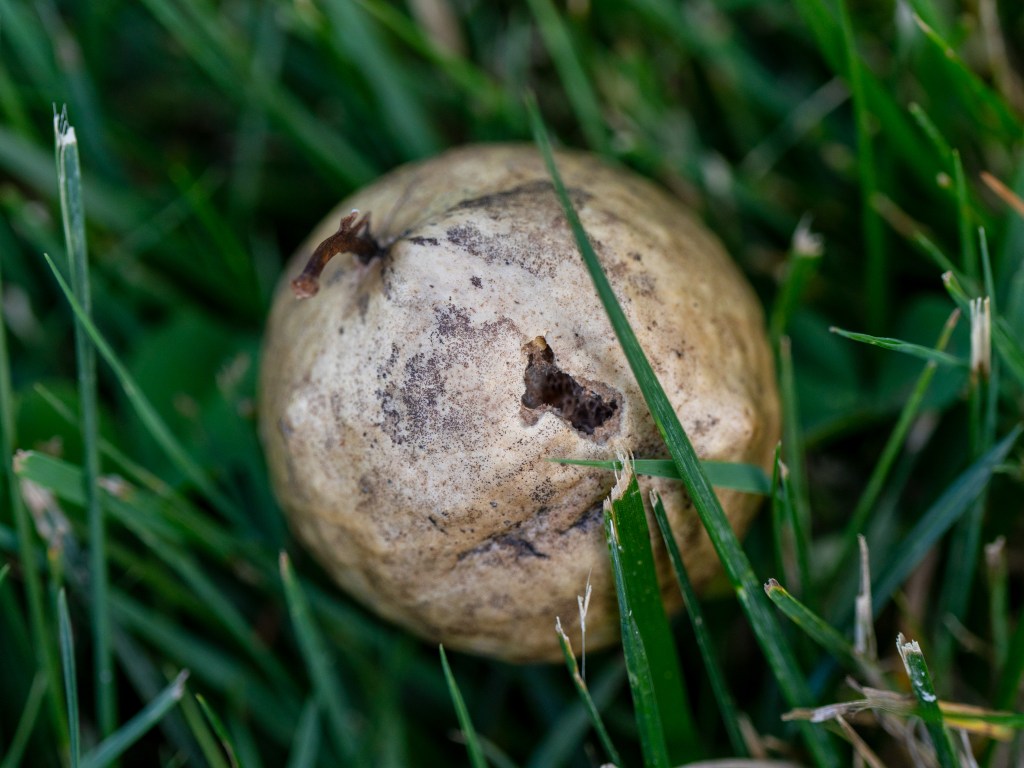
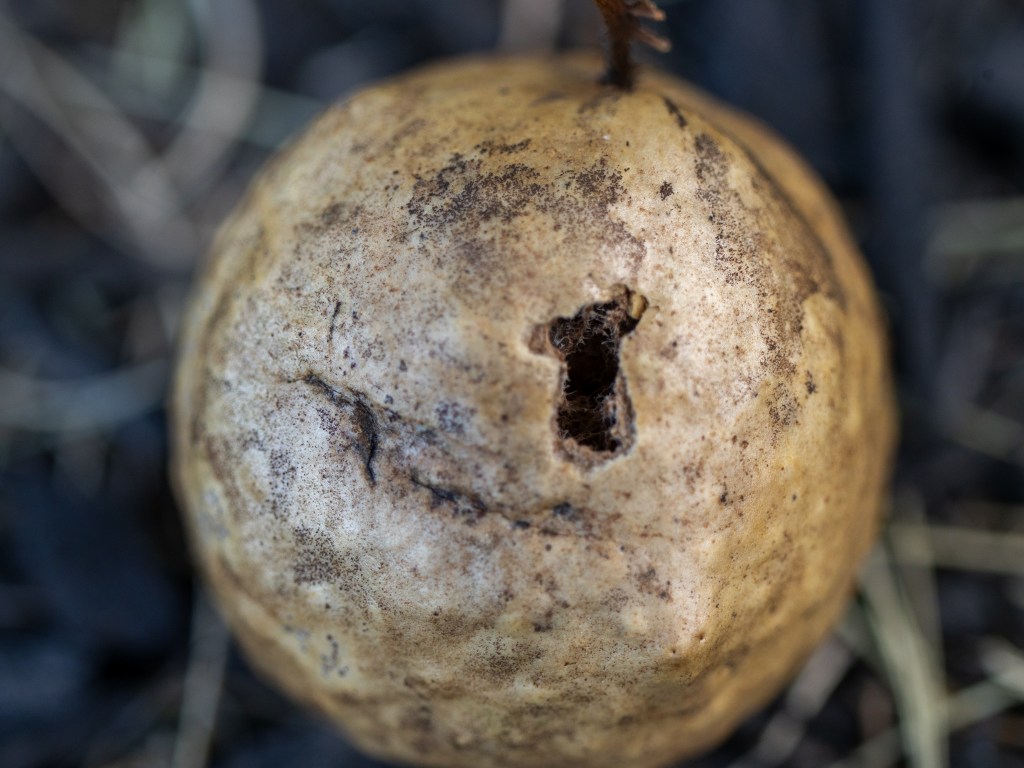
We carefully broke one open. Aha, instead of fruit flesh, there was a sponge-like structure hidden inside the crispy shell. They are definitely not fruit!
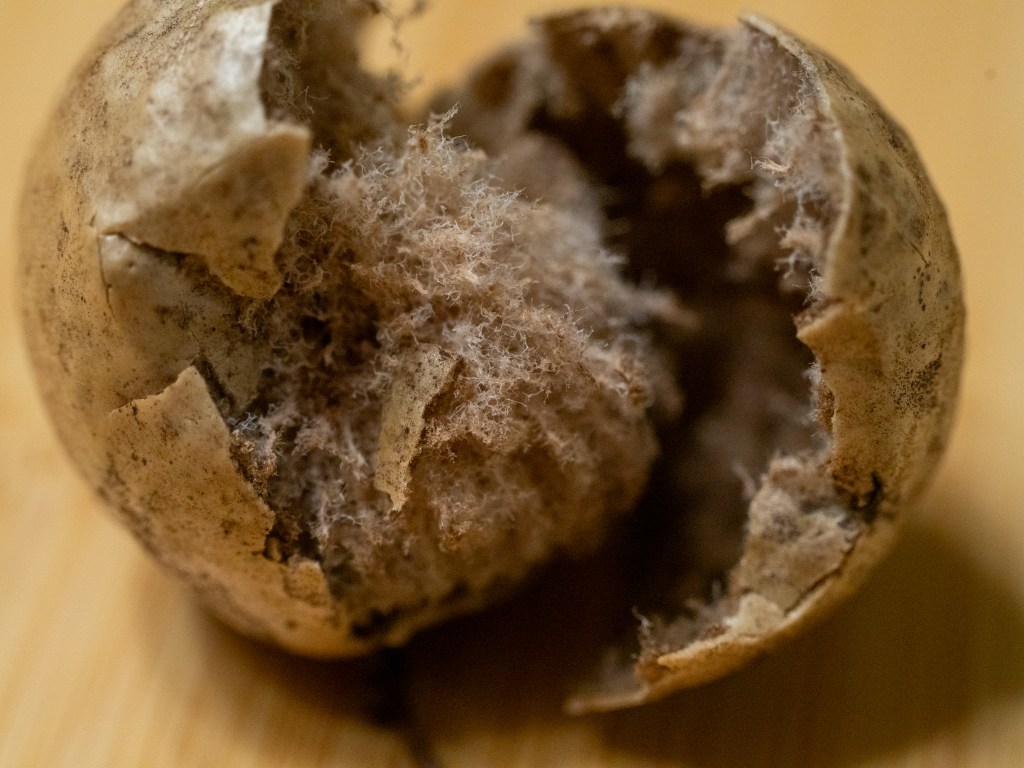
Then we learned that they are oak galls! They’re growths formed on oak trees when tiny wasps lay their eggs inside oak leaves or twigs. The tree reacts by growing a protective “home” around the insect larvae.
Fun Facts About Oak Gall
- The oak tree grows the new “house” just because a tiny insect told it to!
- These houses come in all sorts of funny shapes and sizes. Some look like mini-apples, others like cones, marbles, and even saucers.
- The oak galls are “rainbow” colored — you can find them in green, yellow, brownish, or even pink, bright red.
- The baby insect inside eats its house. The gall tissue provides food for the growing grub. It’s like living in a snack.
- Once the first insect moves out, other insects like ants move in. The abandoned galls can become temporary or permanent shelters for spiders, beetles, ants, etc.
- Even cooler, the new ant residents become bodyguards for the tree. The ants protect the oat tree from other bad bugs and even some fungi.
- Some old documents were written with ink made from oak galls. People crush galls to get a special ingredient called tannins for their ink.
- People used to use galls to predict the future. The ancestors say that if you opened a gall on Michaelmas Day and found a worm, it meant a pleasant year. Finding a worm signified a pleasant year. A spider meant a bad year, a fly meant a moderate season, and nothing meant serous diseases.
- Most of the time, the bumps (oak galls) don’t hurt the big, healthy oak trees. They are a natural part of the tree.
Feel free to download the worksheet for practice.
 Bumpy Buggies
Leave a comment